E-commerce
Quizora: AI that understands:
how you lear
To create an intelligent platform that generates topic-based tests, provides explanations, and adapts difficulty to support effective learning and track progress.
Project Goal
The platform helps learners monitor growth, identify gaps, and improve knowledge efficiently, making studying personalized, adaptive, and focused on real improvement.
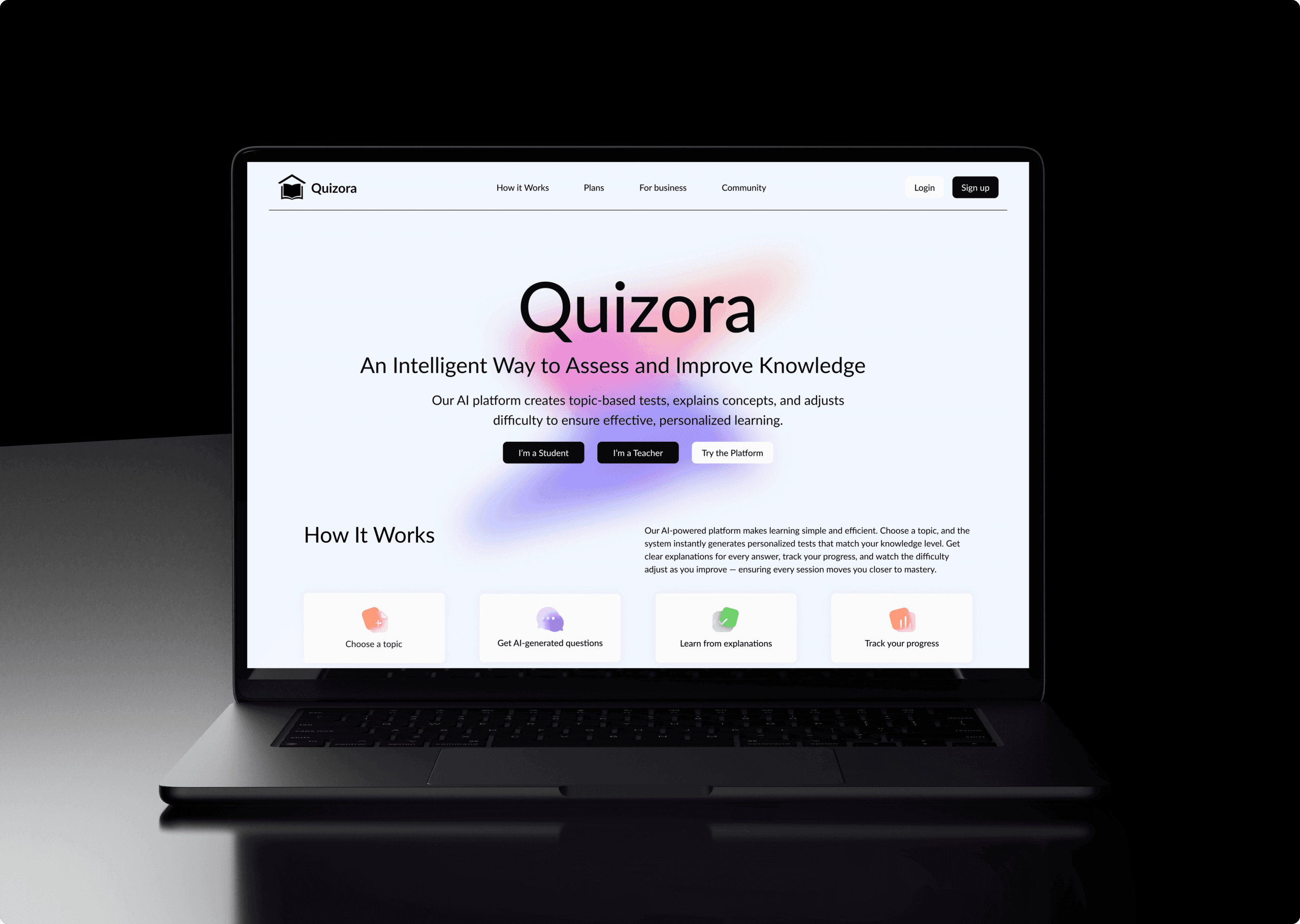
We used a modern, scalable tech stack to ensure performance: Python and FastAPI power backend and AI/LLM integration, while React.js drives the frontend dashboard.
Tech stack
PostgreSQL manages data, AWS handles deployment and DevOps, and Figma supports UI/UX design, delivering a reliable, adaptive, and high-performing learning platform.
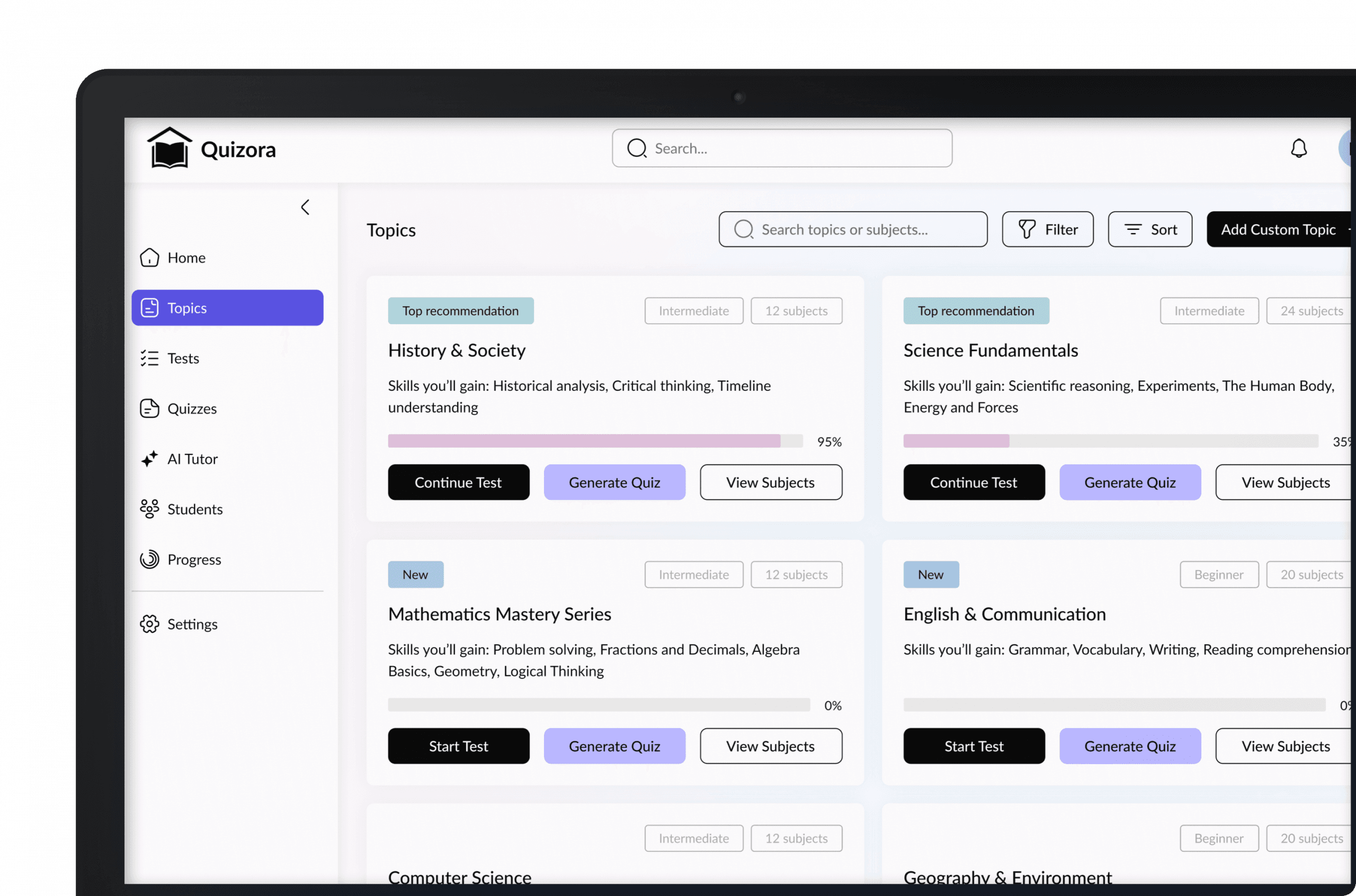
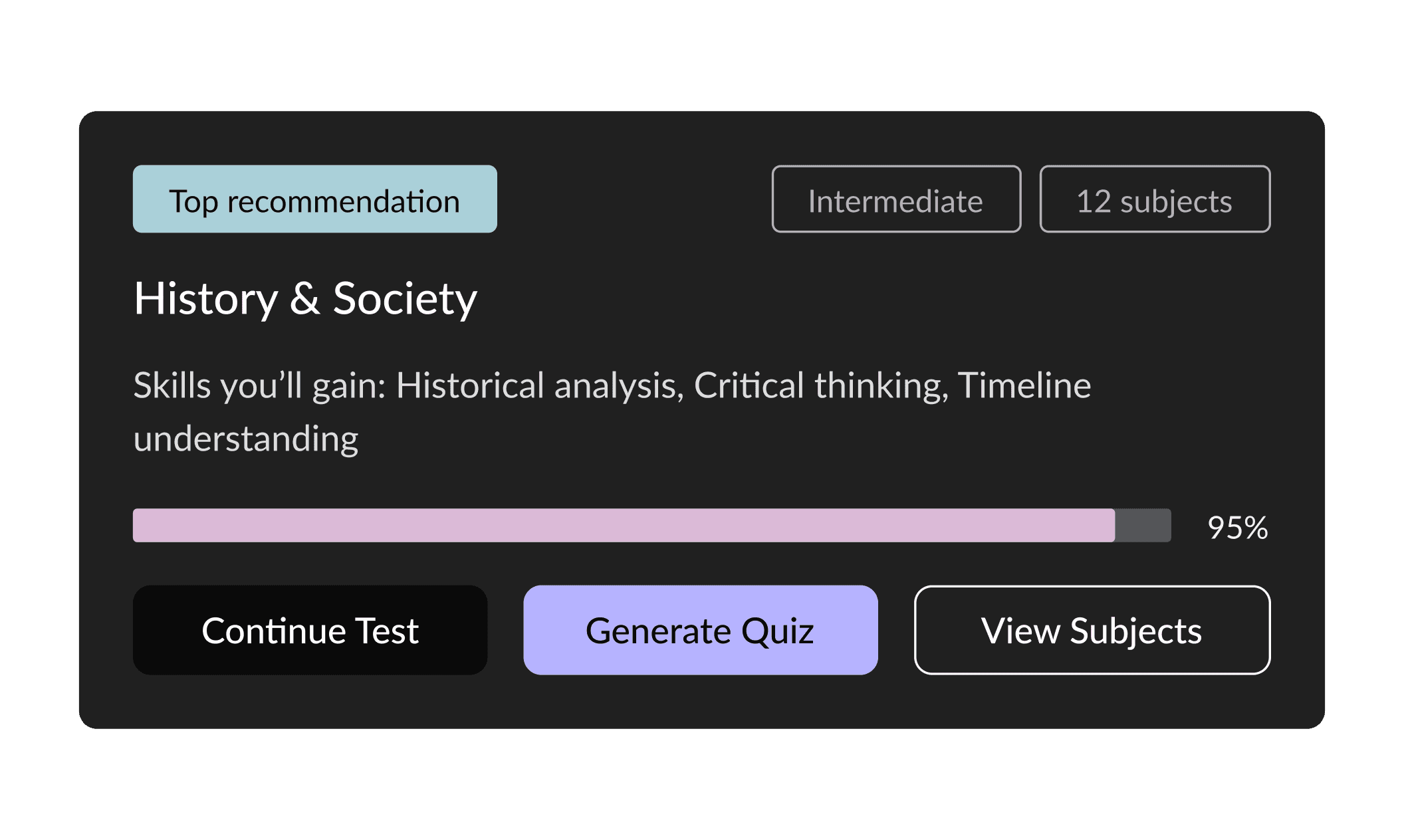
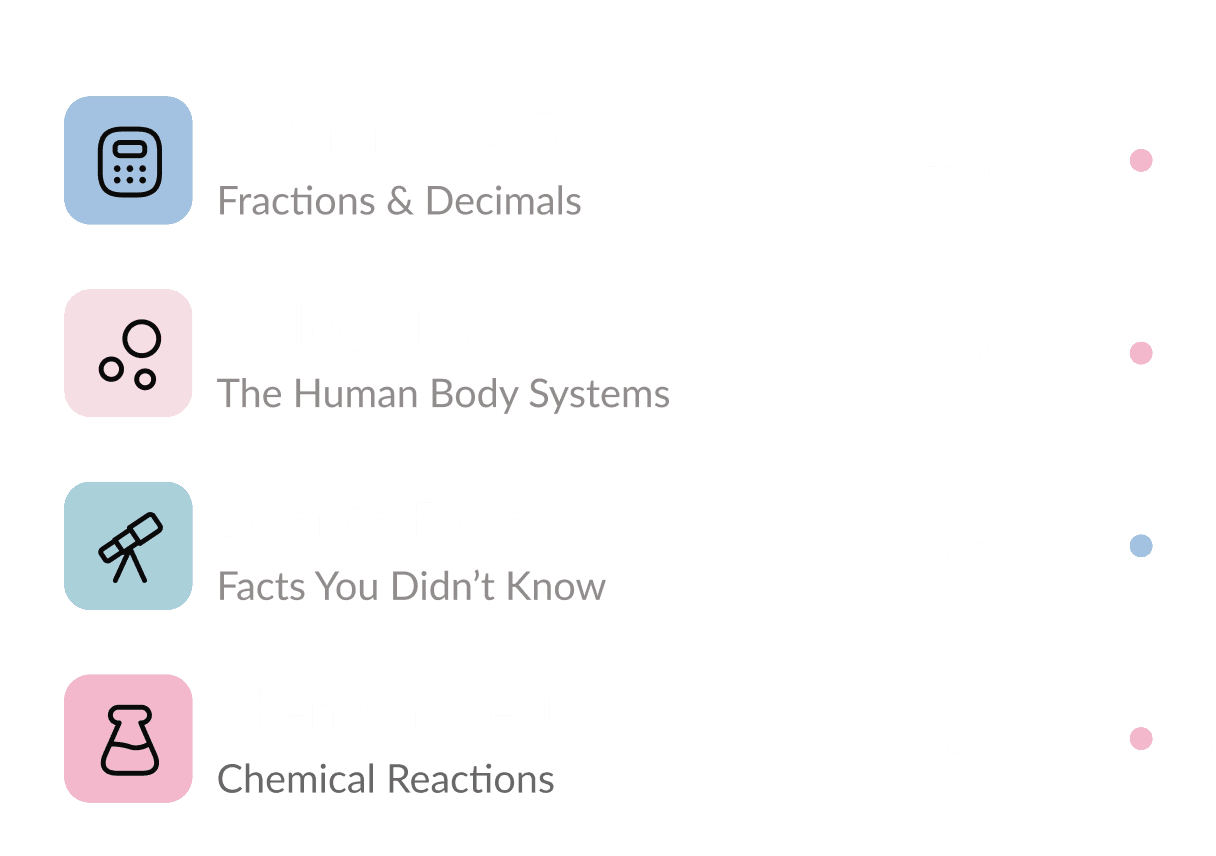
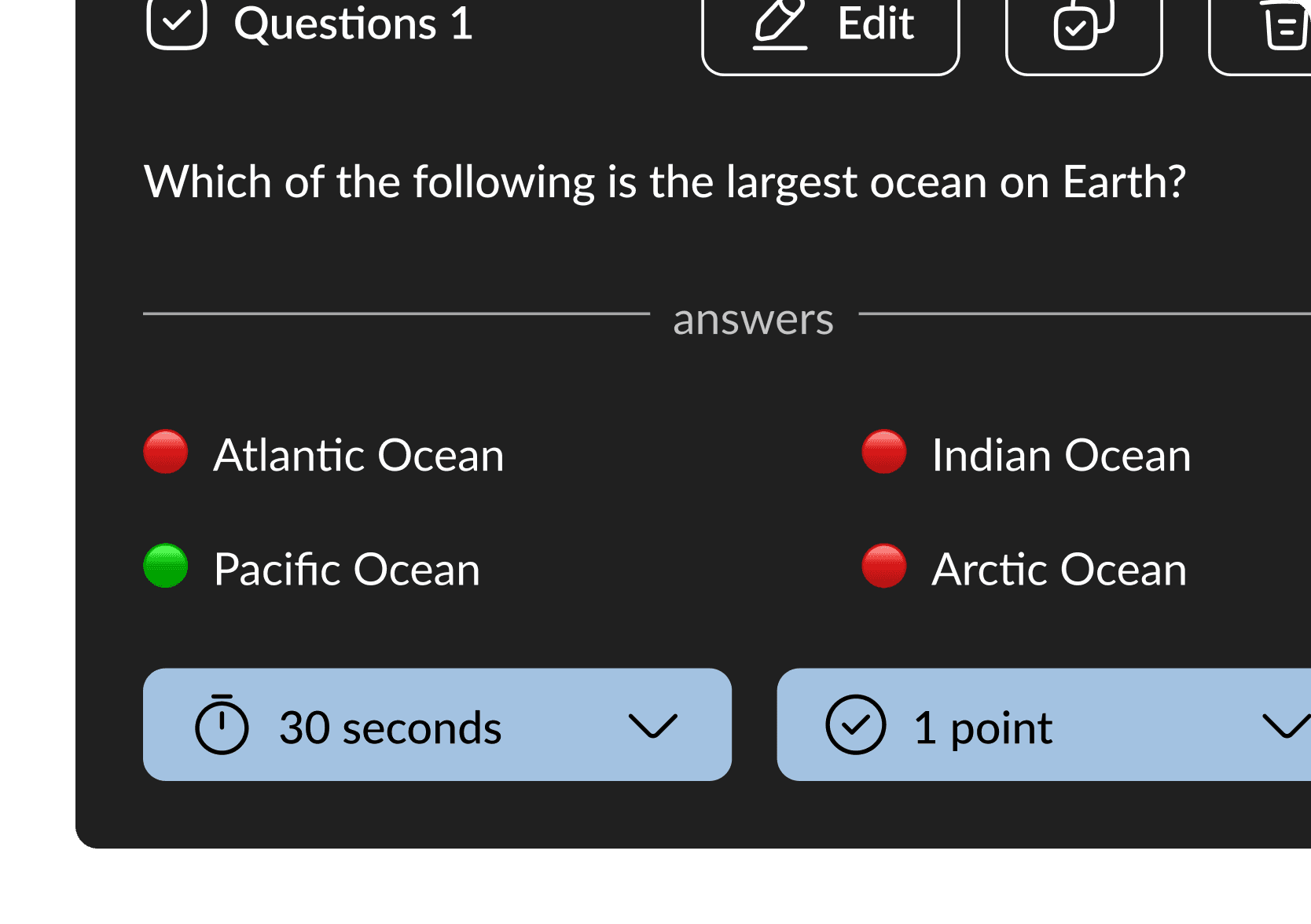
This page lets you explore and manage subjects within the selected topic. You can view detailed sections like “The Human Body Systems” or “Matter and Its Properties,” track your progress for each, and either repeat completed tests or generate new quizzes to reinforce your knowledge.
This page lets you explore and manage subjects within the selected topic. You can view detailed sections like “The Human Body Systems” or “Matter and Its Properties,” track your progress for each, and either repeat completed tests or generate new quizzes to reinforce your knowledge.
Services
Custom Web DevelopmentCustom Web Development
Tailored web solutions built from scratch to match your business goals, tech stack, and scalability needs.Tailored web solutions built from scratch to match your business goals, tech stack, and scalability needs.
AI Software DevelopmentAI Software Development
We integrate AI features like chatbots, recommendations, and automation to make your product smarter.We integrate AI features like chatbots, recommendations, and automation to make your product smarter.
ML Software DevelopmentML Software Development
We design and train machine learning models for prediction, classification, and data-driven decisions.We design and train machine learning models for prediction, classification, and data-driven decisions.
Development OperationsDevelopment Operations
Streamlined DevOps processes to automate delivery, improve reliability, and scale infrastructure.Streamlined DevOps processes to automate delivery, improve reliability, and scale infrastructure.
Quality AssuranceQuality Assurance
Comprehensive testing to ensure your product is stable, bug-free, and user-ready across all devices.Comprehensive testing to ensure your product is stable, bug-free, and user-ready across all devices.
Business AnalysisBusiness Analysis
We clarify requirements, uncover gaps, and align technical solutions with your business objectives.We clarify requirements, uncover gaps, and align technical solutions with your business objectives.
Design DevelopmentDesign Development
User-centered UI/UX design that enhances usability, supports brand identity, and drives engagement.User-centered UI/UX design that enhances usability, supports brand identity, and drives engagement.
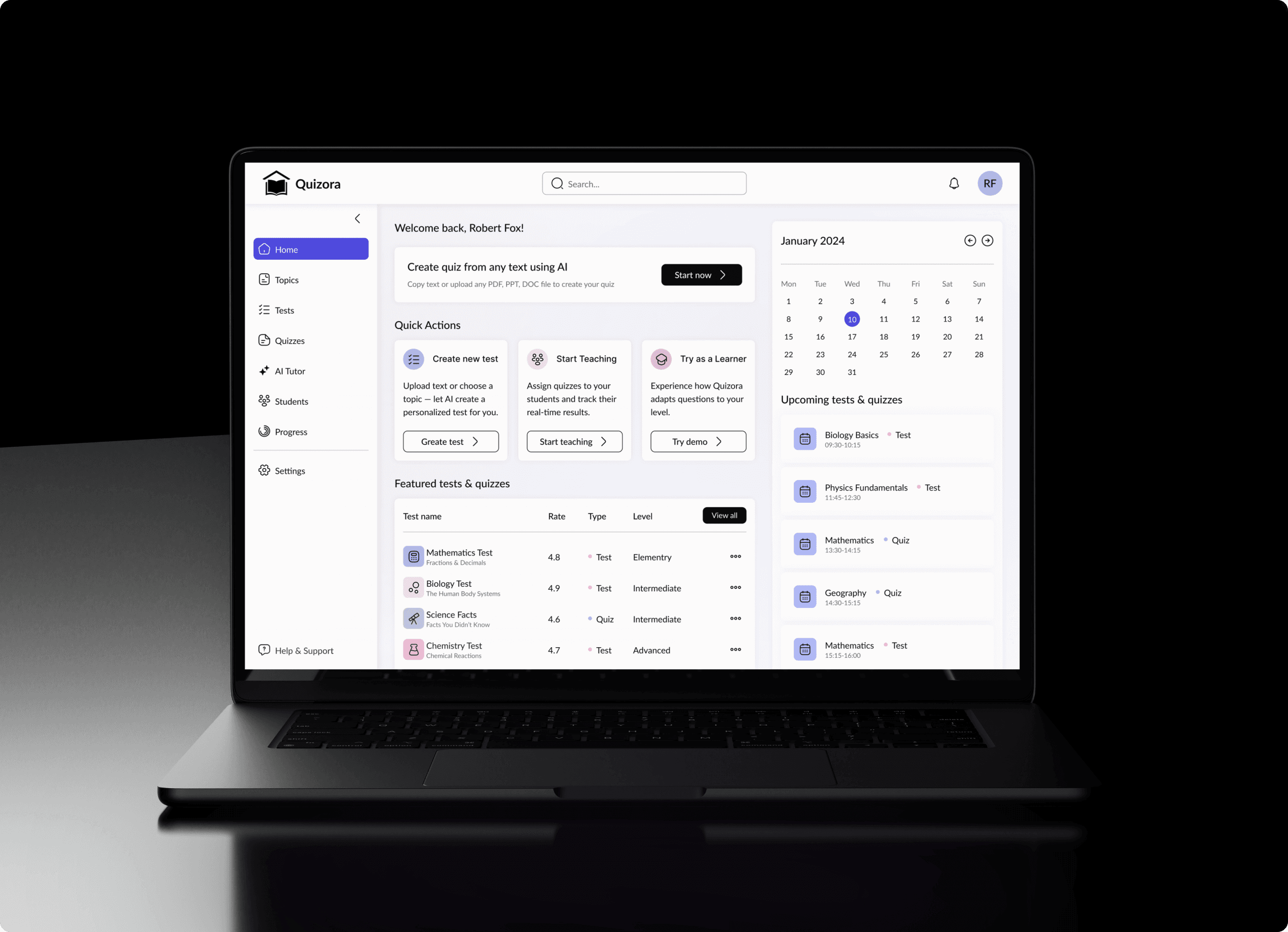
Adaptive learning requires precision. Using AI and LLMs, we built a system that generates accurate, topic-specific tests and adapts difficulty to learner progress.
Key Insight
Early focus on analytics and modular design ensured reliability, scalability, and actionable insights, creating a platform that continuously improves learning outcomes.

Project Plan
1. Architecture Planning and AI Integration
We developed a robust AI-driven system that generates quizzes by topic, adapts difficulty per learner, and provides explanations, supporting scalability and seamless analytics for smooth use.
2. Quiz Generation and Customization
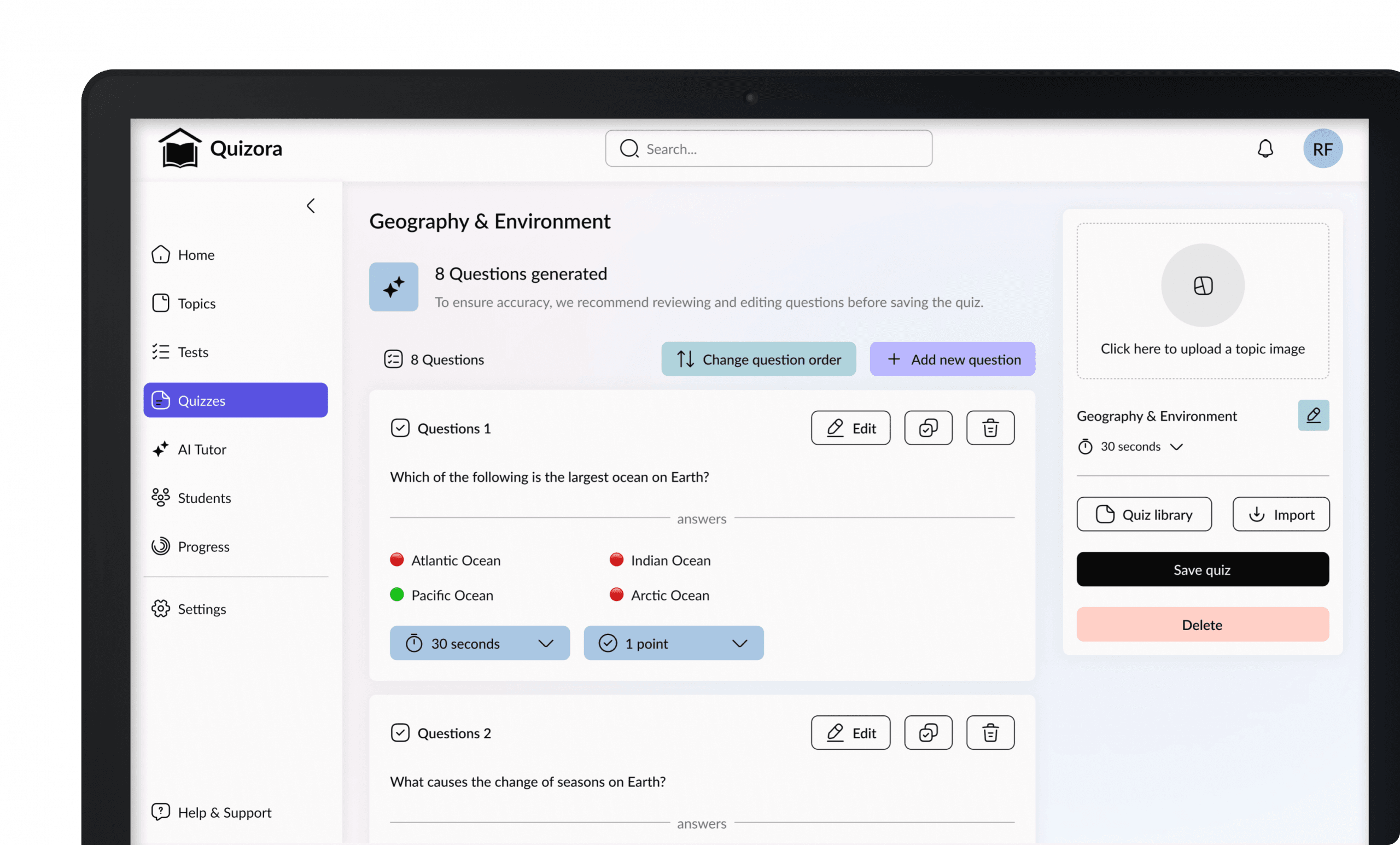
We implemented AI models to create quizzes with tailored difficulty, explanations, and question variety, allowing educators to customize content and learners to receive adaptive, engaging tests.
3. Analytics and Progress Tracking
We built a system to track learner performance, mastery levels, and progress trends. Real-time analytics provide actionable insights for educators and allow the platform to adjust quiz difficulty dynamically.
4. Responsive Dashboard and UX
We designed a fully responsive web dashboard that adapts to desktop and mobile devices. Users can generate, edit, and review quizzes, interact with AI suggestions, and monitor learner progress efficiently.
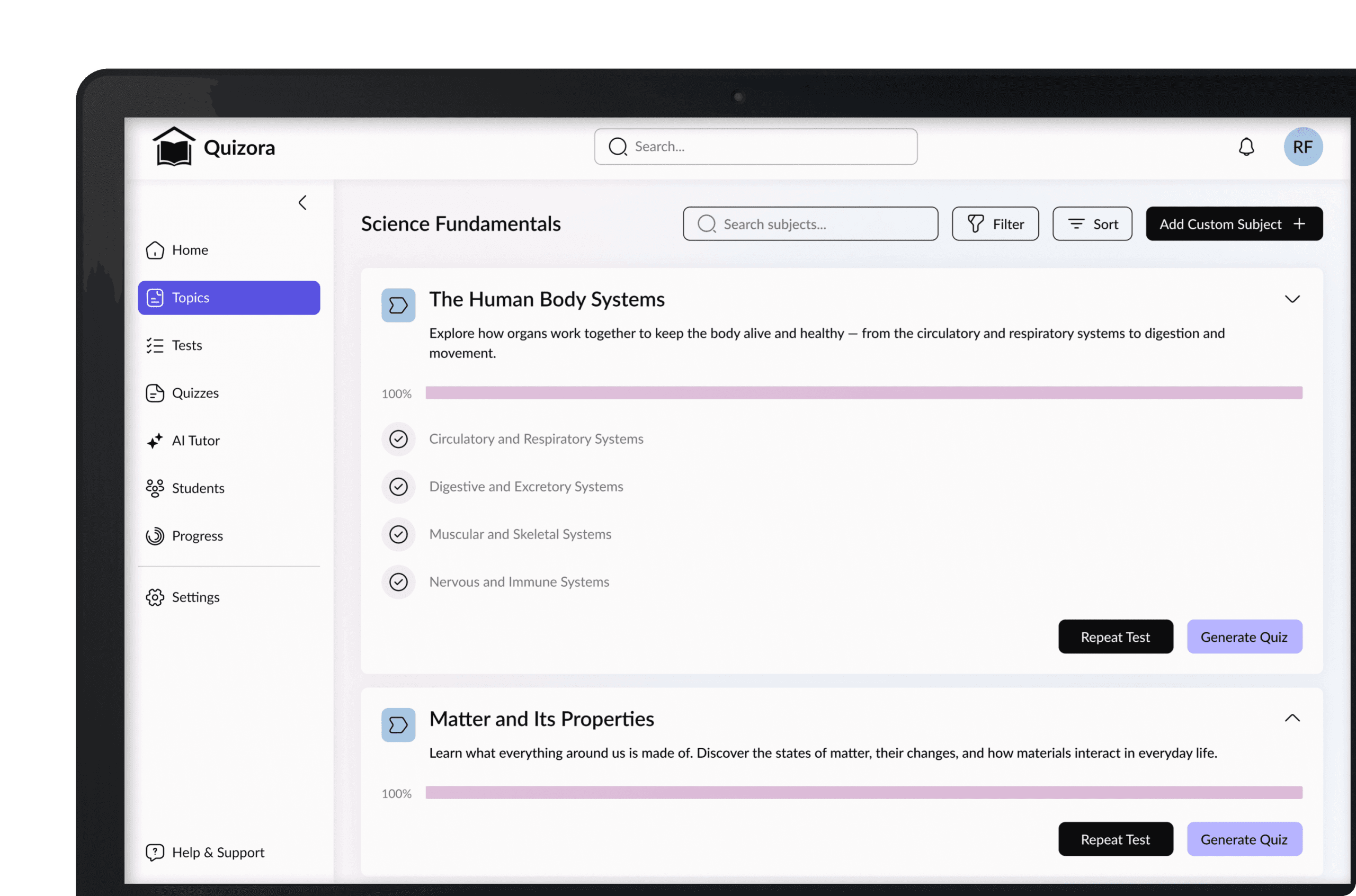

This page lets you explore and manage subjects within the selected topic. You can view detailed sections like “The Human Body Systems” or “Matter and Its Properties,” track your progress for each, and either repeat completed tests or generate new quizzes to reinforce your knowledge.
This page lets you explore and manage subjects within the selected topic. You can view detailed sections like “The Human Body Systems” or “Matter and Its Properties,” track your progress for each, and either repeat completed tests or generate new quizzes to reinforce your knowledge.
“
Collaborating with Wamisoftware was seamless from start to finish. The team understood our vision for Quizora an engaging, AI-powered learning platform and brought it to life with precision and creativity. The result exceeded expectations: fast, intuitive, and loved by our users.
Daniel
Co-Founder of Quizora
Approach
Challenge
The client needed an intelligent platform to create adaptive tests that generate quizzes by topic, provide explanations, and adjust difficulty. Our task was to build a reliable AI solution with a responsive dashboard, progress analytics, and smooth educator–learner interaction.
Solution
We began with a discovery phase to align educational goals, learner needs, and technical requirements, defining core features, adaptive quiz flows, and a roadmap for the AI-powered test platform.
Solution
Our software architect designed a modular, AI-driven architecture capable of generating quizzes by topic, adjusting difficulty, and providing explanations. This ensured fast processing, reliable analytics, and scalable performance even with increasing learners and data.
Solution
We assembled a cross-functional team of developers, AI/NLP specialists, UX designers, QA engineers, and analysts. The team adapted to changing priorities, ensuring flexibility, fast delivery, and alignment with evolving educational and business objectives.
Solution
We built the platform with an intuitive web dashboard, responsive design, and features for generating, reviewing, and analyzing quizzes, with testing and monitoring to ensure stability and performance.
Final Solution
Through careful planning, collaboration, and technical expertise, we delivered a scalable, AI-powered adaptive test platform. It streamlines quiz creation, ensures accuracy, provides actionable insights, and supports learners and educators efficiently.
Teamvoice
“
Quizora had two very different user types — educators managing content and learners navigating assessments. Designing a dashboard that worked intuitively for both, without compromising either experience, took real thought. The result justified the effort.
Head of Design
Anastasia
“
Cross-functional coordination, shifting priorities, stakeholders with different definitions of "done" — Quizora had all of it. What kept it moving was consistent communication and a team that stayed focused on the actual goal rather than the noise around it.
Delivery Manager
Yulia
“
Adaptive difficulty, accurate explanations, reliable analytics — each of those sounds straightforward until you're building them together and they have to reinforce each other rather than conflict. The precision required in testing was significant. What made it worthwhile was seeing the model actually personalize learning in a way that felt meaningful rather than mechanical.
Head of AI/ML
Roman
Solving the next challenge
Next Project
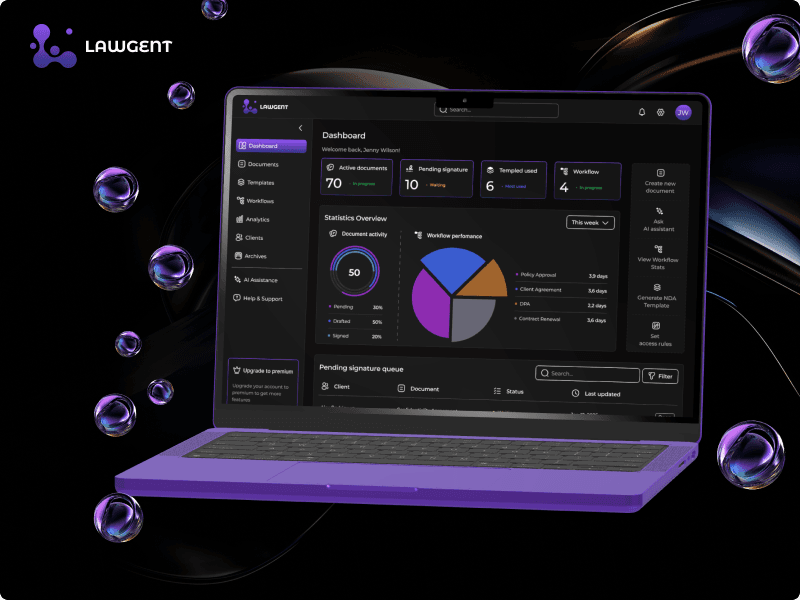
Lawgent — AI tool for legal professionals. →
Next Project
Lawgent — AI tool for legal professionals. →